Four days, a set of plans, and learning to think in timber: discovering the Segal Method
What I tried
There's something rather beautiful about timber framing. The simplicity of the material. The geometry. The idea that individual pieces of wood can be carefully measured, cut and joined to create something strong and lasting. Having already experienced building the shell of a Tiny House, I wanted to take things a little further. The Segal Method is a building mindset, which appealed to me immediately. Simple, flexible designs, an emphasis on standard material sizes, less reliance on wet construction methods and an ambition to make building more accessible to ordinary people.
This course immediately jumped into working much more closely from a set of plans. And I quickly discovered that understanding a building on paper is an entirely different skill from working in a team assembling one.
What I noticed
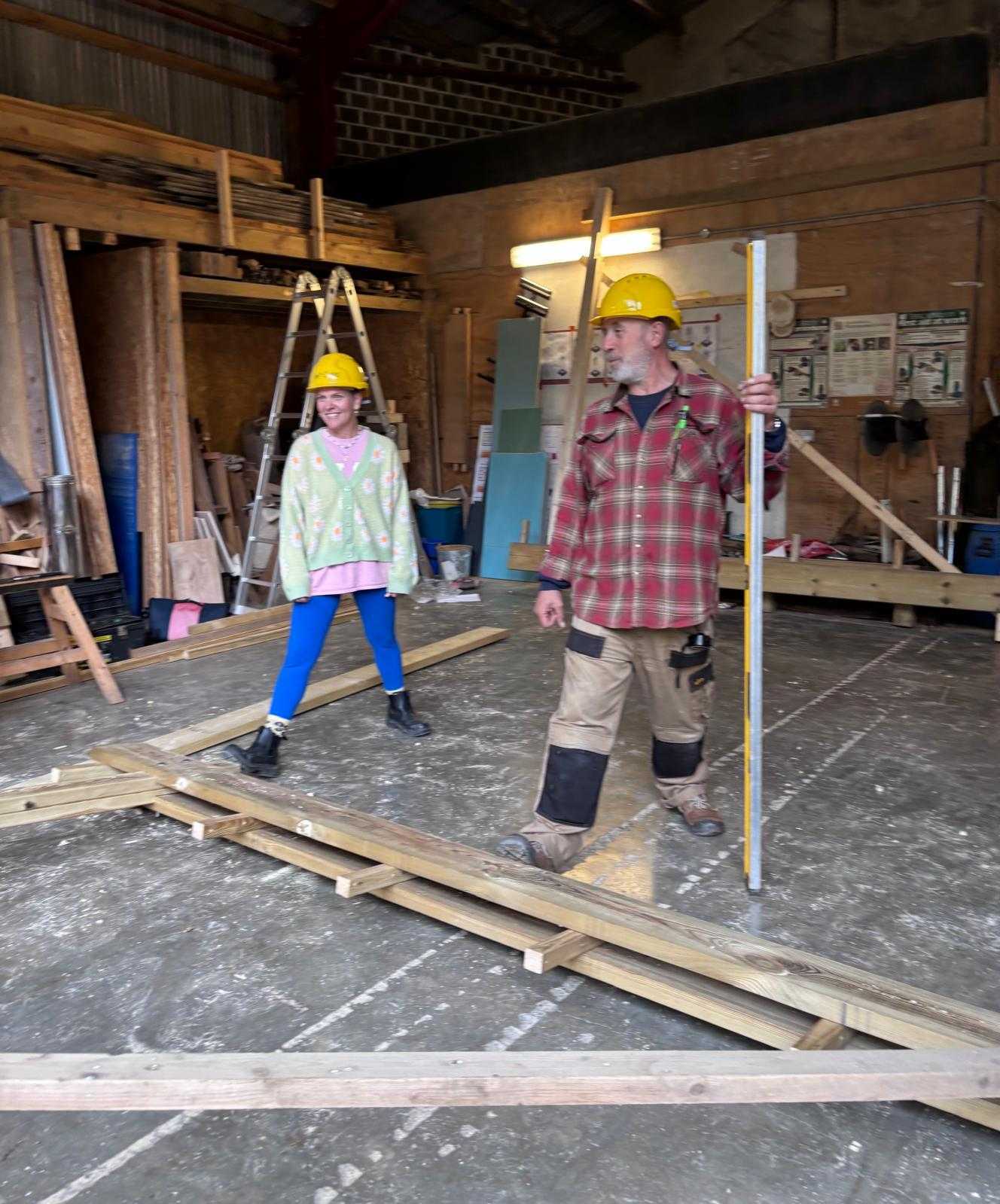
Lots of ground work preparation is needed. Before anyone picks up a saw, its vital to explore the working environment, surveying, considering ground pins and different foundation options. The message was clear: understand your site before you start to cut any timber. We learned about using surveying staffs, reading plans and preparing cutting lists. Every piece of wood needs a purpose, a position and a measurement.
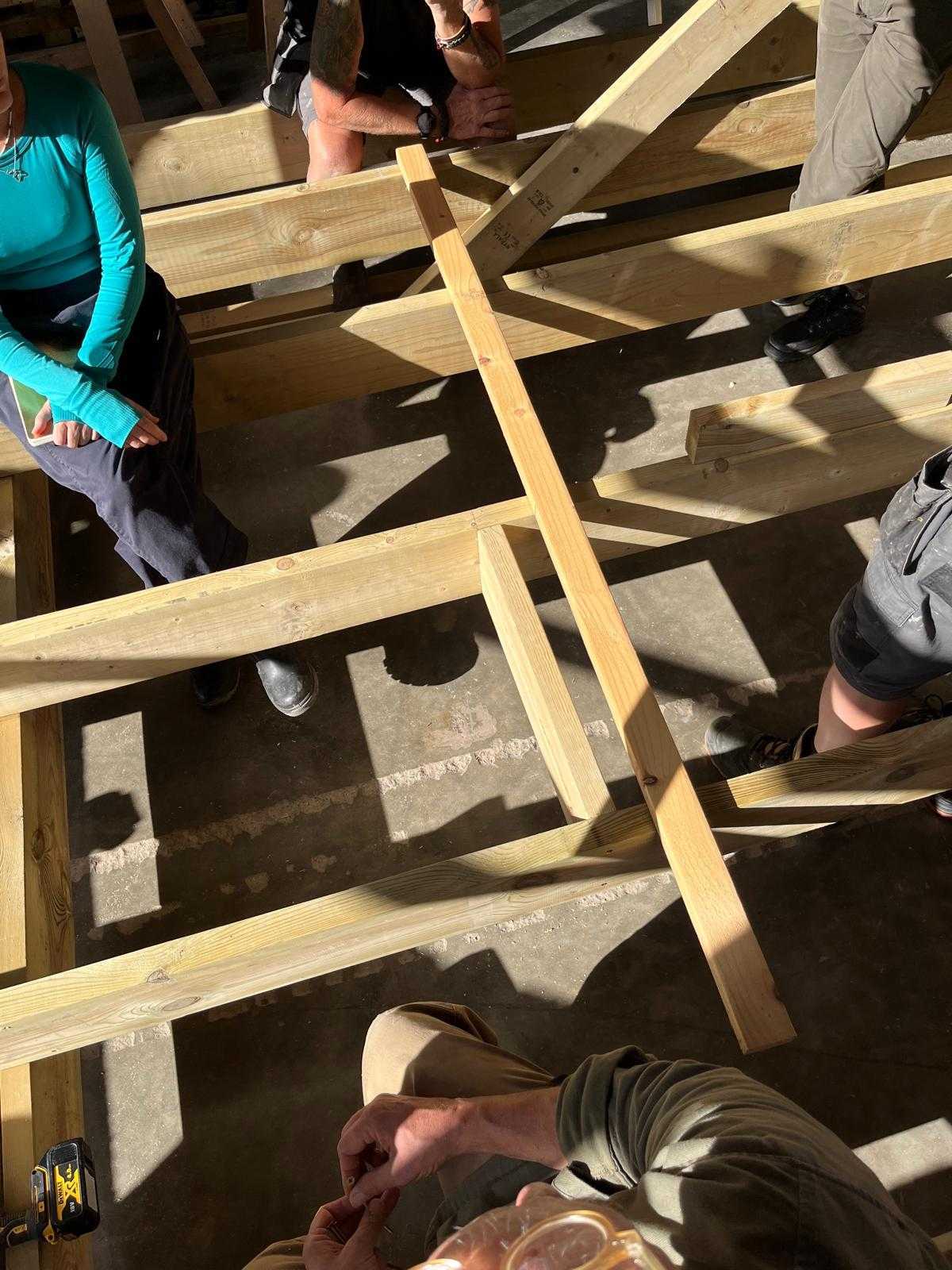
Then came the structural thinking. We talked about load paths, how weight travels through a building and eventually reaches the ground. Posts carry load downwards through compression. Joists help to resist bending and support the floors or ceilings. Bracing helps a frame resist sideways movement.
And here's something that genuinely changed how I looked at timber: its strength isn't simply about how much wood you use. Its orientation and the way it works within the structure matter enormously. A piece of timber doesn't become a joist or a post because of its dimensions alone. It's position and purpose give it that identity.
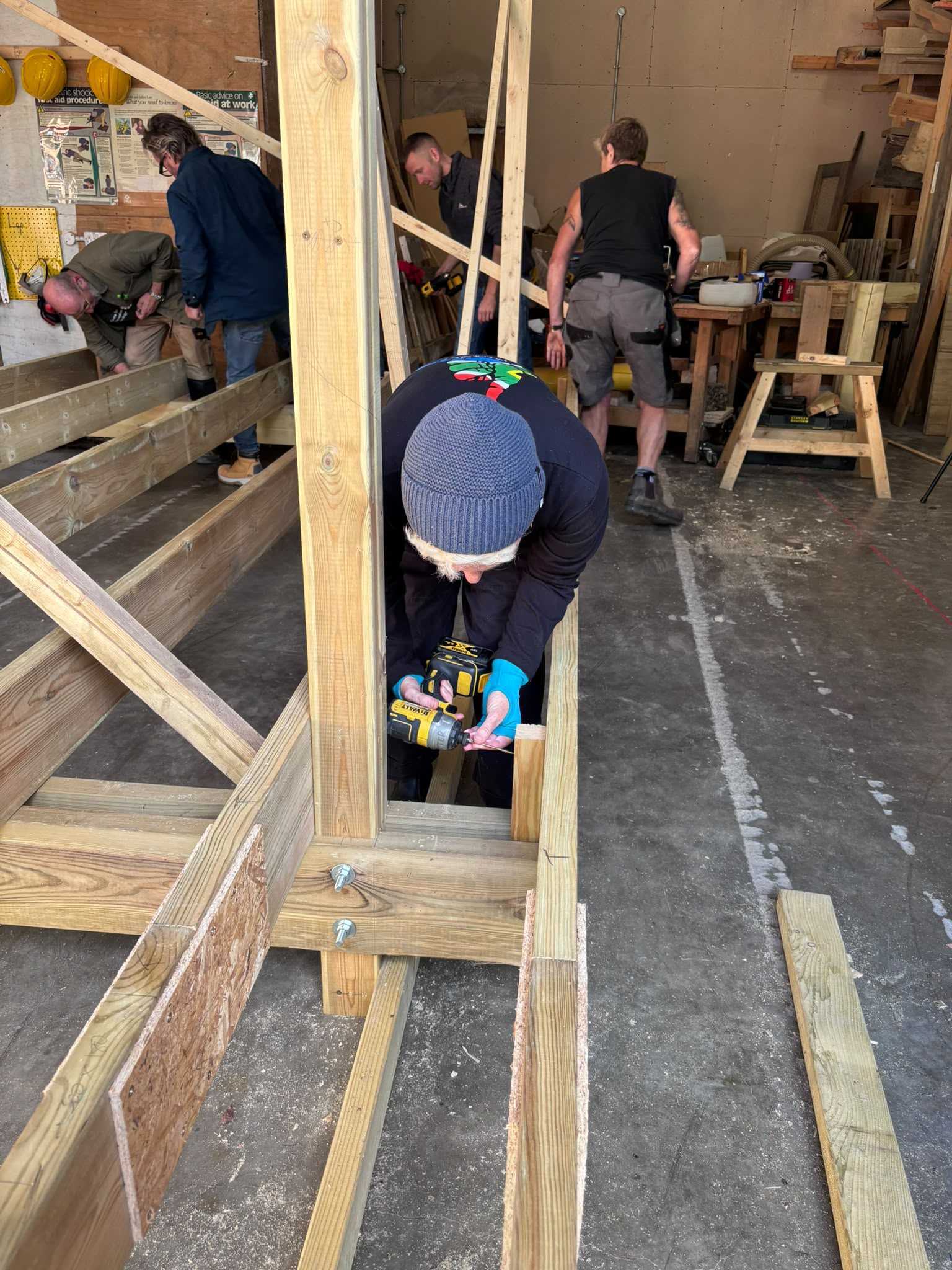
We also explored joints, from the connections between rafters, joists and wall battens to scarf joints for joining longer lengths of timber. There were lap joints, braces, coach bolts and plenty of pocket screws.
Some of the machinery was demonstrated rather than operated by us, so I still have plenty of hands-on learning ahead of me. But it was often the smaller, practical lessons that stayed with me. Understanding why you cut on the waste side of a marked line to keep your measurements accurate, or how a spare batten can help bring floorboards together without damaging the timber.
What I'm learning
The Segal approach made me think differently about what makes a good building. It's not necessarily about using more materials, more complicated techniques or more elaborate foundations. It's about understanding what each component needs to do, and then designing accordingly.
Working with standard material dimensions can help reduce waste. Thoughtful structural design can make construction simpler and more accessible. I was particularly interested in the possibilities of leaving structural timber visible. A brace doesn't always need to be hidden. Sometimes the very thing that makes a building strong can also be part of what makes it beautiful. That combination of practicality, simplicity and craftsmanship really appeals to me.
I'm also learning that construction drawings are a language of their own. In software engineering, I'm comfortable working with complex systems and understanding how components depend on one another. Here, I'm having to develop the ability to look at a drawing and imagine the physical structure it represents.
It's challenging, occasionally frustrating and surprisingly satisfying when something, even small, starts to make sense.
Next time
Four days had barely scratched the surface, but I left feeling excited about what might come next.
There's something quite liberating about stepping into something completely unfamiliar, especially when you've spent so many years doing something else. For me, the next step is about building confidence. Taking on projects of my own, trusting myself a little more and getting comfortable with not knowing everything before I start.