Three machines and a growing appreciation for the power of knowing what you're doing.
What I tried
This morning found me back at the MakerSpace, this time alongside five others for a machinery induction session. I was lucky enough to have access to a tutor who was going to introduce three machines in the woodworking space. This felt like a real opportunity to explore a side of woodworking I'd barely touched. Although I am particularly interested in developing traditional skills, I know machinery will ultimately form a necessary part of my journey.
Before anyone got anywhere near a blade, we discussed all the necessary health and safety topics, covering personal protective equipment, dust, noise and the risks that come with working in a workshop. Even something as small as a splinter can cause a surprising amount of trouble (in the wrong place).
What I noticed
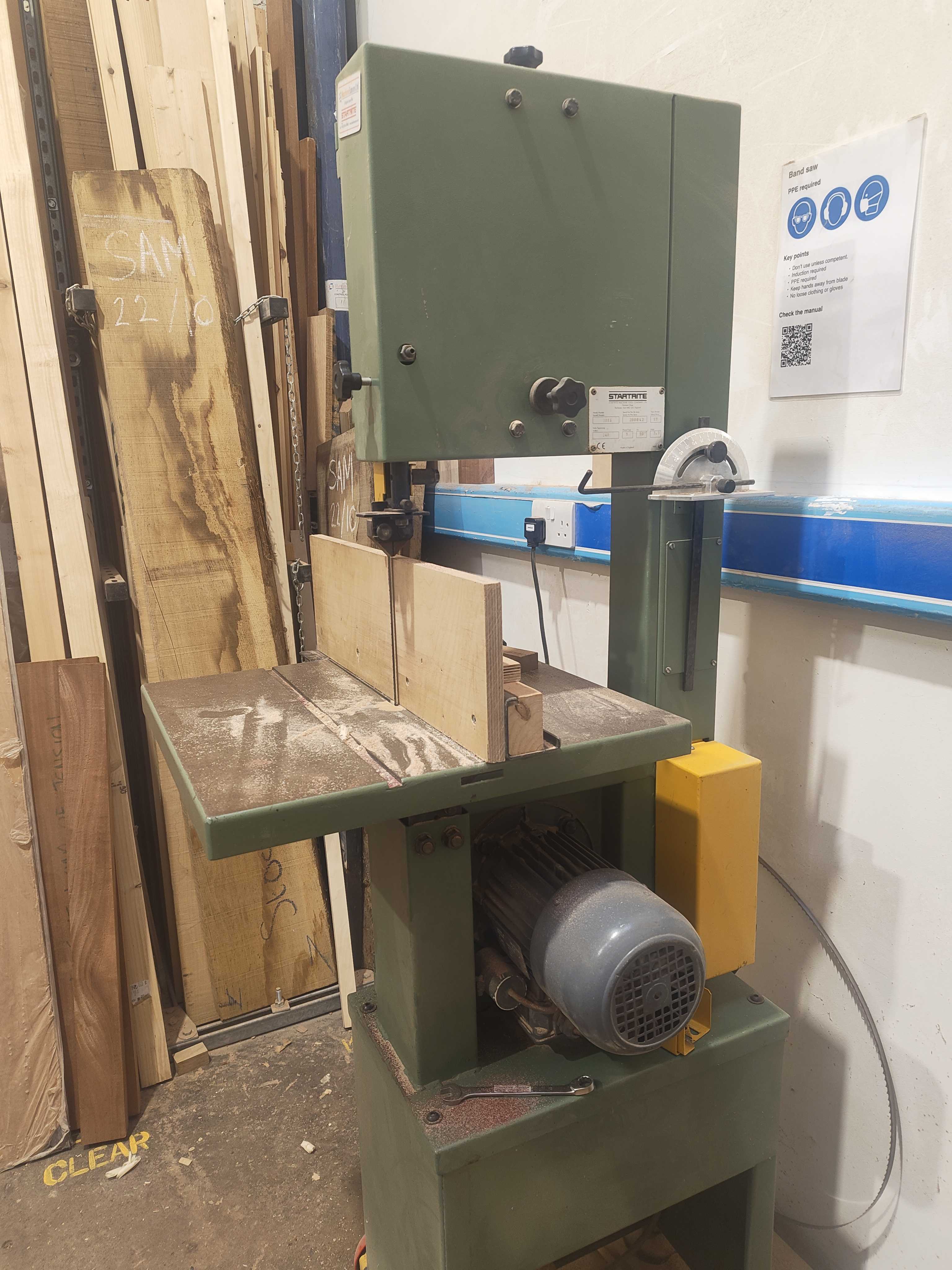
First up was the Startrite 3015 bandsaw: a surprisingly friendly introduction.
We covered the basics of the machine, discussing the belt system, what it's designed to do and the safety checks needed before using it. I was surprised by how quickly I began to feel comfortable with it. It was just a machine in the corner that I ignored, but learning about it I found something particularly appealing about its versatility. Unlike a handsaw, where I'm still concentrating on making a reasonably straight cut, the bandsaw opens up possibilities for cutting shapes and curves.
We discussed the blade guard, using suitable jigs and keeping hands away from the cutting path. One practical lesson stuck with me: don't force the timber through the blade. It needs to be fed at a controlled rate, suiting the material and the cut. It sounds obvious, but it's a familiar theme from my first afternoon practising with handsaws. More force doesn't necessarily mean better results.
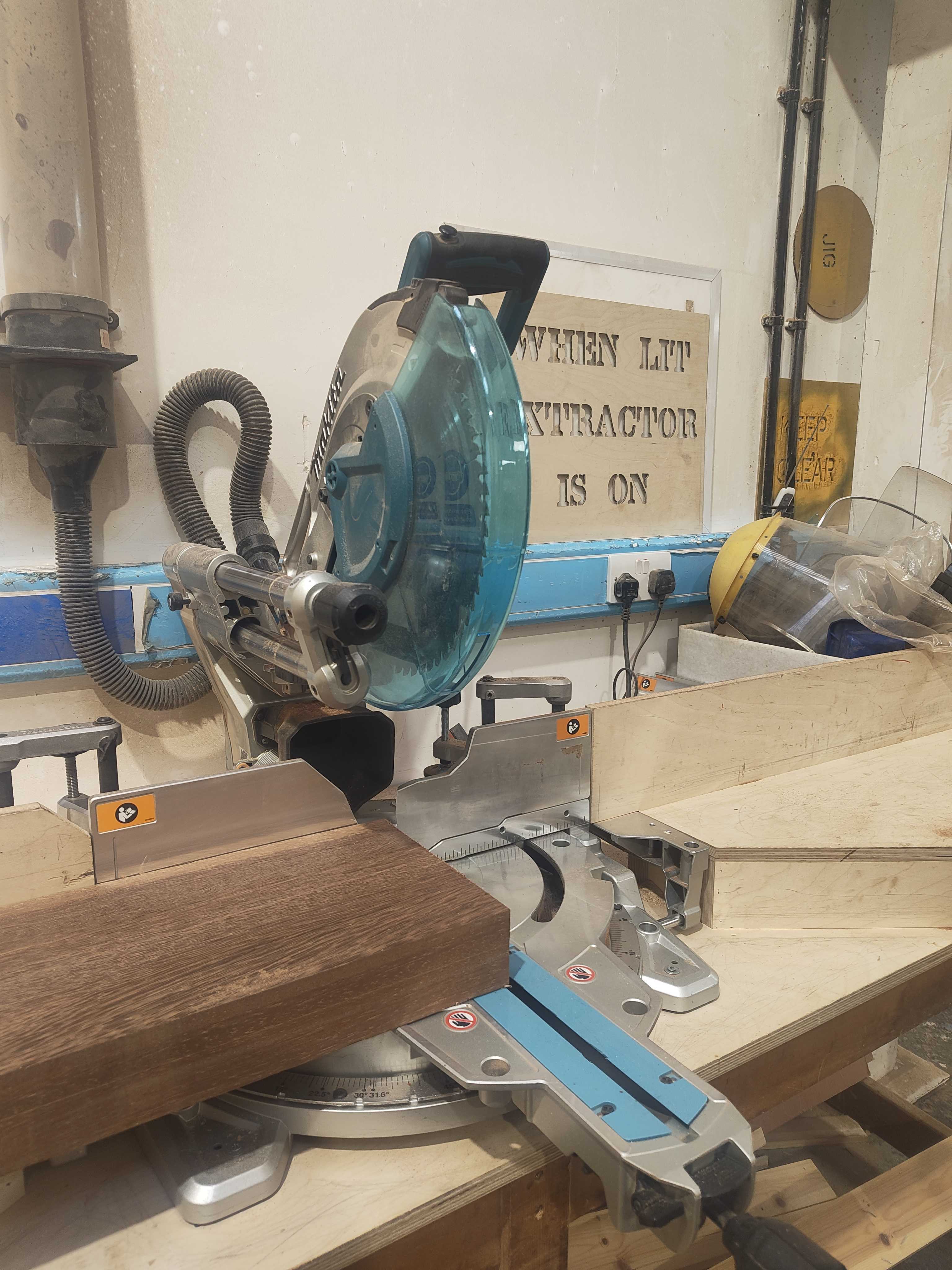
Next up the Makita LS1219L compound mitre saw: impressive, powerful and a little intimidating
This one looked considerably more serious. Its range of adjustments was fascinating, offering mitre, bevel and a combinations of alternative angles, sliding like butter through the timber. Having the machine perform the work so effortlessly was satisfying, but I was also much more conscious of the risks. Kickback is something I've never experienced and I'd very much like to work towards keeping it that way (until I no doubt will be exposed to it).What stayed with me most was the advice to trust your instincts. If something doesn't feel right, stop and ask. No ego. No pretending to understand something because everyone else seems comfortable.
Before switching on a machine, I want get into the habit of thinking about where the timber will be positioned, how the cut will happen, what might move and where my hands need to be. That kind of thinking feels just as important as learning which buttons to press.
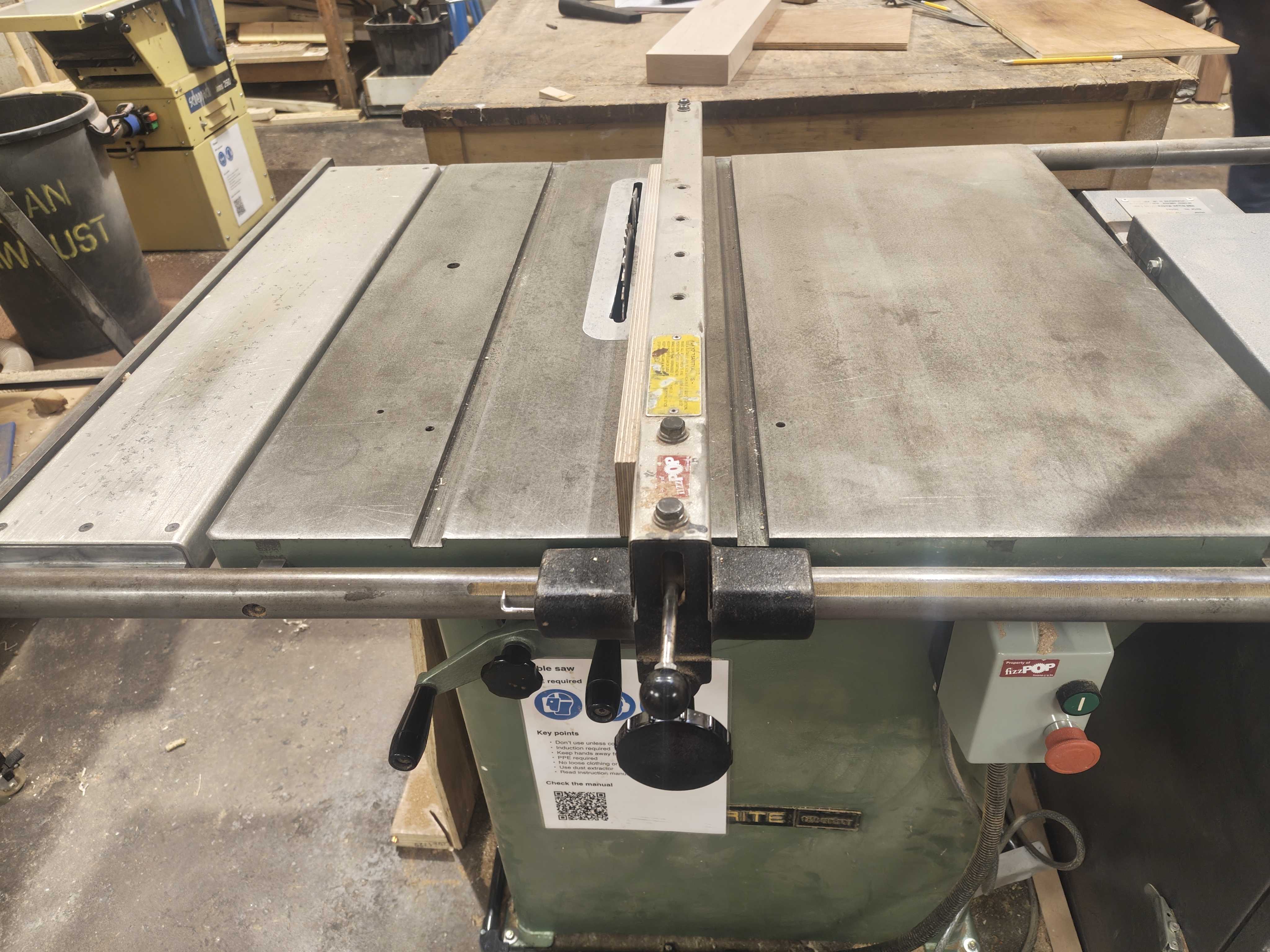
Finally, we reached the Startrite 175 Tilt Arbor table saw: even the name sounds rather serious, but it was the one I was most frightened of
We explored blade adjustments, tilting opportunities and how the machine could be used for cutting larger pieces of timber. The safety discussion was noticeably longer this time. There was much more to consider, from guarding and positioning to the consequences of something going wrong. Right now I don't imagine I'll be rushing to use it independently any time soon. But I was glad to have the opportunity to try it.
Having the crown guard in place made a noticeable difference to how comfortable I felt, but it didn't remove the risks of course! And when you hear the motor and see the blade in motion, it's difficult not to appreciate the amount of power involved. The table saw is likely to remain on my list of things to learn more about rather than a tool I'm eager to use straight away.
What I'm learning
What struck me throughout the morning was how different the three machines felt.
The bandsaw seemed surprisingly approachable. The mitre saw was exciting, but demanded more confidence. The table saw made me acutely aware of how much I still need to understand. And yet all three offered something that would be difficult, slower or more physically demanding to achieve by hand.
I'm beginning to see that learning machinery isn't simply about making woodworking quicker. It's about understanding what each tool is designed to do, recognising its limitations and deciding when it's appropriate to use it. I'm also questioning what confidence should actually look like in a workshop. Is it being able to approach a machine without feeling nervous? I'm not convinced.
Perhaps it's about being able to recognise when something isn't right, ask a question without embarrassment and make a considered decision about whether to proceed.
There's something reassuring about discovering that the patience I'm trying to develop with hand tools applies just as much to machinery. You still need to understand the material, plan the cut and pay attention to what you're doing. The machine might make the cut faster, but it doesn't do the thinking for you.
Next time
I'm looking forward to getting back to making things. The induction has opened up a whole new set of possibilities, but I'm not planning to abandon my handsaw just yet. I still want to develop the fundamentals of measuring, marking, cutting accurately and understanding how timber behaves.
What I'd like to do now is begin connecting those hand skills with the machinery I've been introduced to. The bandsaw feels like a sensible place to develop my understanding further, with appropriate supervision and within the limits of my induction. I'm also keen to learn more about what the compound mitre saw can do, particularly how different angles are measured and set up accurately. The table saw can wait.
I want to keep building confidence through practice, asking questions and becoming more comfortable recognising what I do and don't know. Three machines down. But with a healthy respect for all of them.